
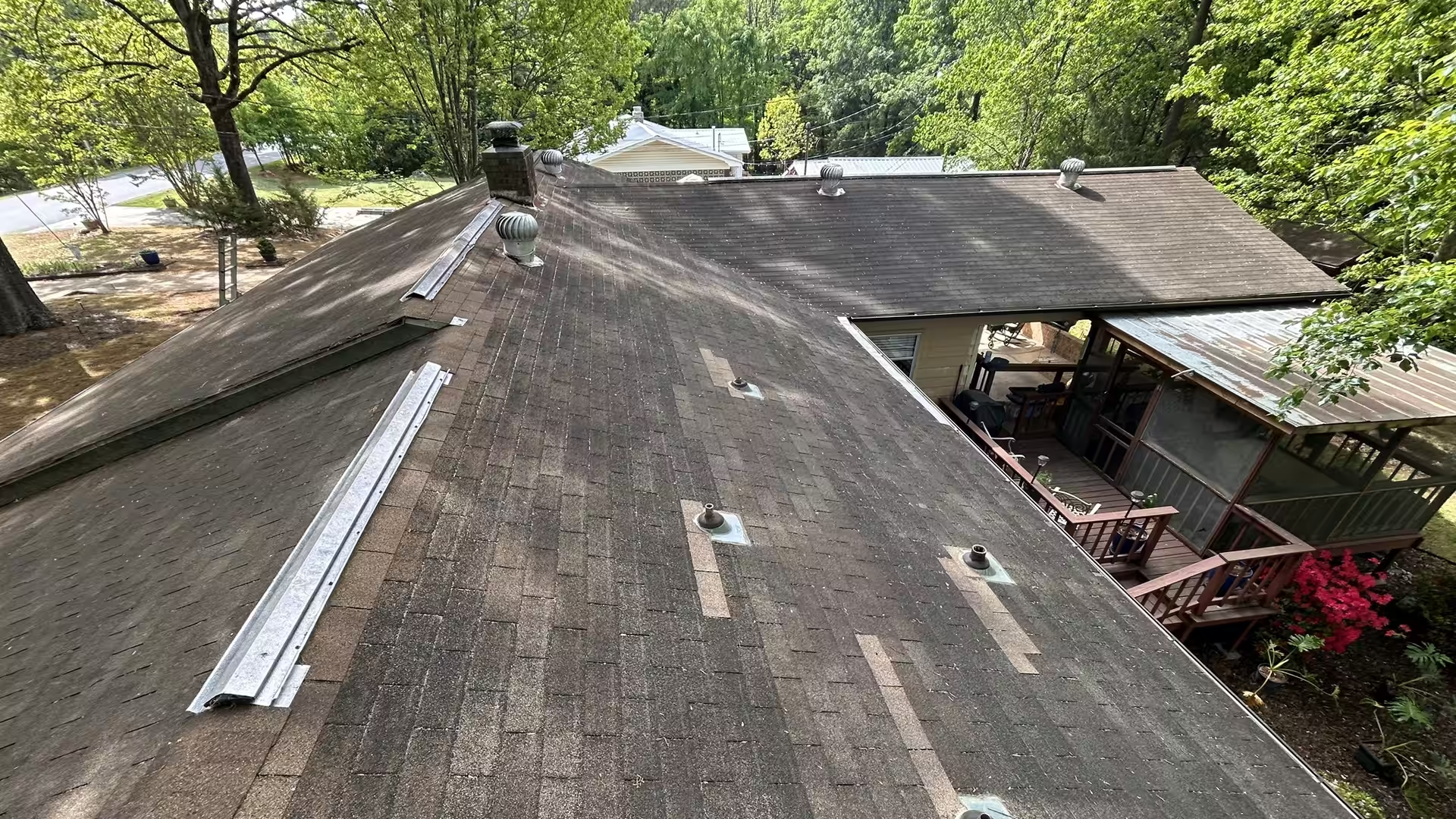
How Wind and Hail Damage Turned Into a Full Roof Replacement in Charlotte, NC
When homeowners think about wind or hail damage, they often picture something dramatic, such as a section of shingles torn away or a tree limb on the roof. This assumption is wrong. Sometimes the signs are much more subtle.
That was the case for Joy, a homeowner in the Charlotte, NC area, after a recent storm moved through. She reached out to us with concerns about possible damage to her roof, and what we found — and what happened afterward — is a good example of what this process can look like, from the first inspection through an insurance claim.
High winds and hail can lift, loosen, crease or remove shingles and can damage flashing, ridge caps and other roofing components. Because wind and hail damage on a roof in the Charlotte, NC area doesn’t look like much at a glance, it can lead to hidden damage down the road.
If strong winds or hail recently moved through your area, here are a few signs to watch for and what you can expect during your roof inspection.
Wind Damage Isn’t Always Obvious
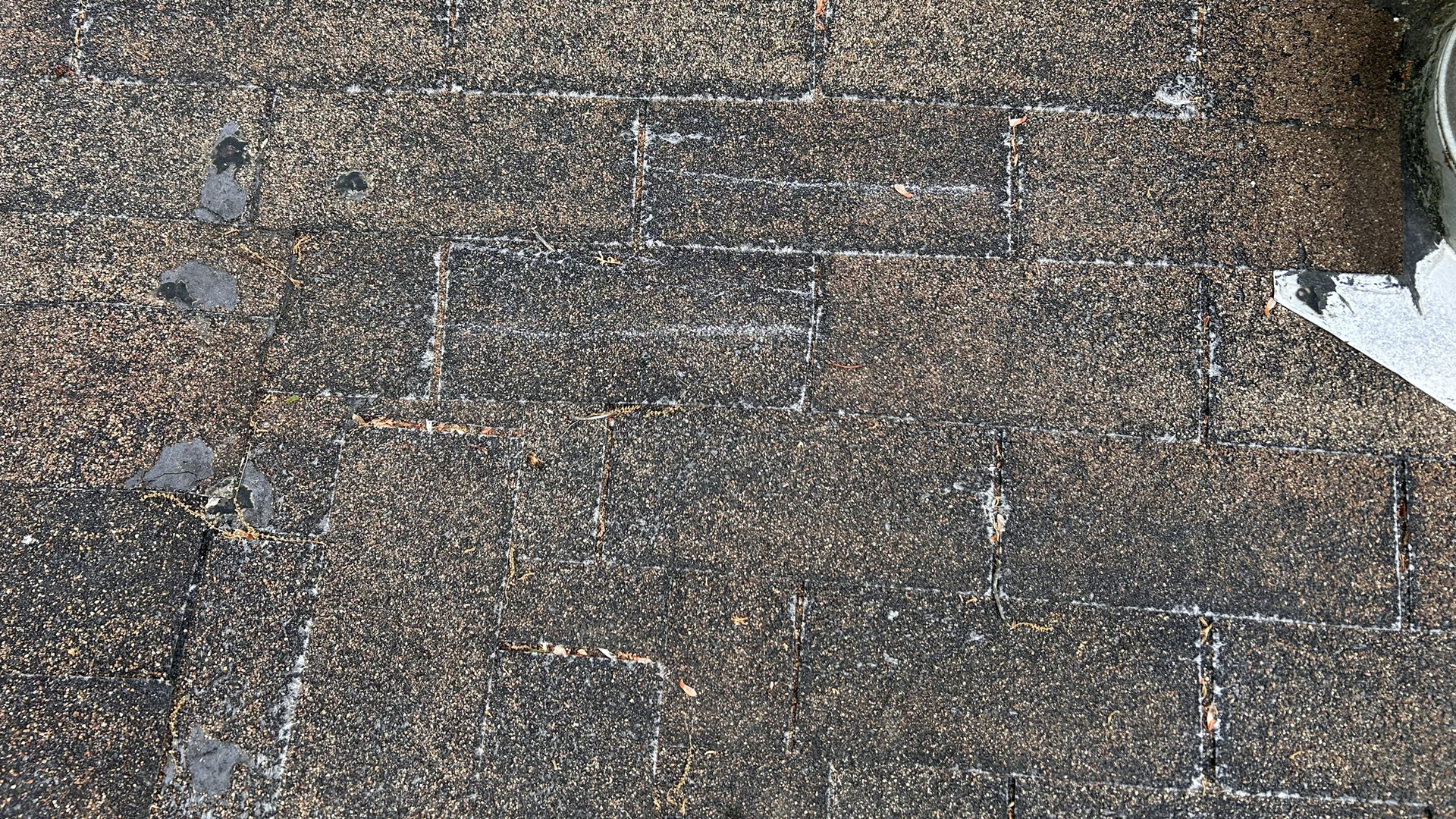
A shingle sitting slightly crooked doesn’t register as a problem to most people standing in the driveway. Neither does a corner that’s curled up half an inch, or a gutter downspout that’s come loose at the seam. Wind pulls at the edges and corners of a roof first, lifting the adhesive seal on individual shingles without tearing them free. The shingle stays in place. The seal underneath doesn’t. A roof can take a direct hit from sixty-mile-an-hour gusts and still look untouched from the street the next morning.
What You Can Look for From the Ground
- Shingles that sit out of line with the row around them
- Shingle edges that appear lifted or missing
- Pieces of shingle or roofing material on the ground
- Metal flashing around chimneys or vents sitting at a different angle than before
- Tree limbs or other debris that may have struck the roof
- New water stains or moisture inside the home
None of these signs may look like an emergency, but any one of them can turn into a leak the next time it rains. A professional inspection can identify signs that are difficult or impossible to see from the ground.
What Wind and Hail Damage Look Like Up Close
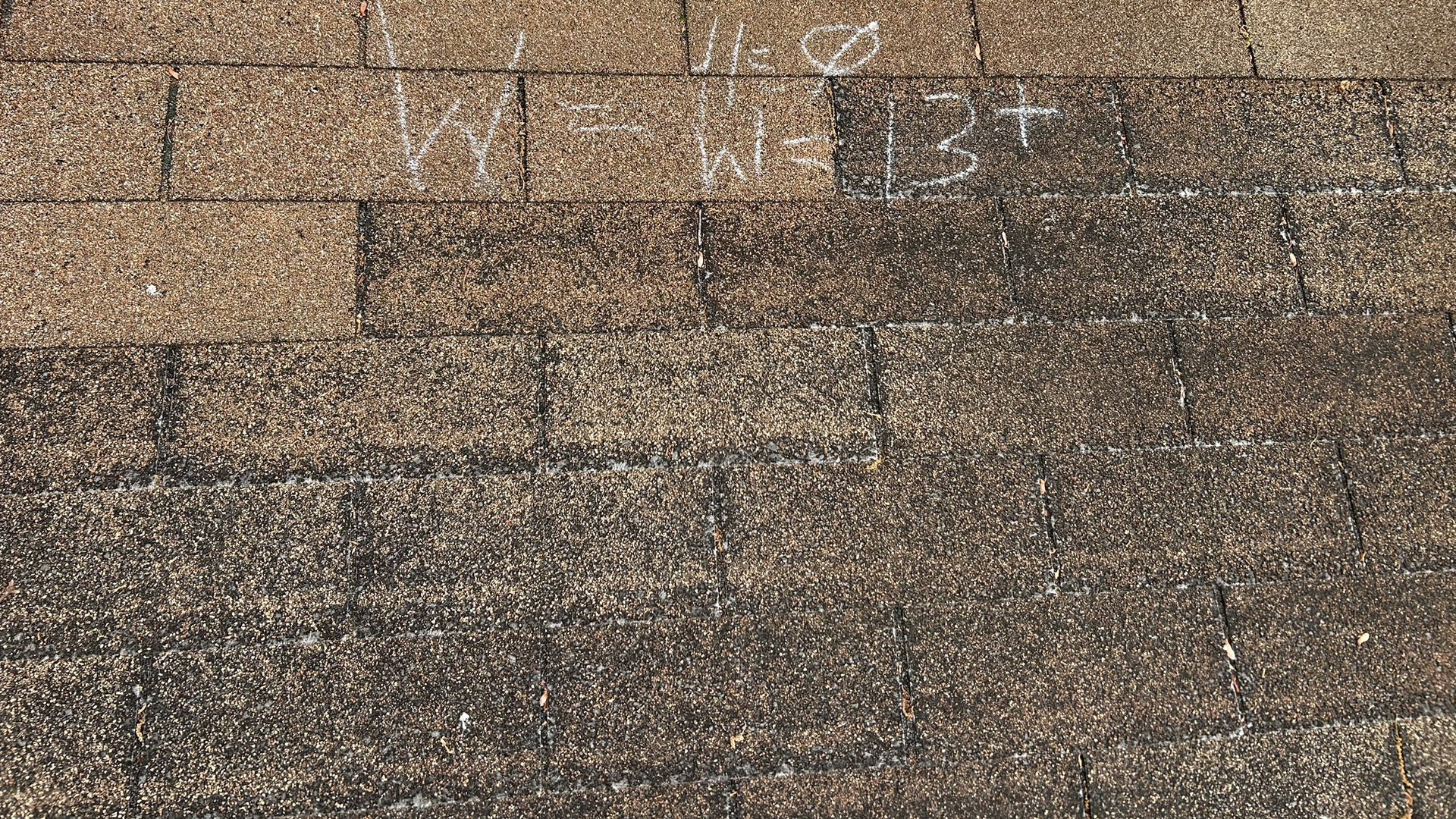
Wind damage to asphalt shingles can leave a clean line where the adhesive strip has separated from the shingle below it. Granule loss can show up as bald patches on the shingle surface, usually clustered near the edges where wind uplift is strongest. Hail damage tends to look different — it can leave small, round bruises or dents in the shingle surface, sometimes with granules knocked loose around the impact point.
A shingle that looks fine from the ground can still have this kind of damage. This is why we recommend scheduling an inspection to check for these issues up close.
During Joy’s inspection, for example, we removed a shingle to get a closer look at the roofing system underneath, which helped confirm the extent of the wind and hail damage.
It’s also important to understand that not all roof damage is storm damage. Age and normal wear can create similar-looking issues, which is why we look at the condition of the entire roof rather than assuming any one sign came from a storm.
How a Wind and Hail Damage Roof Inspection Works in Charlotte
At MBA Roofing, a storm inspection starts on the ground, walking the property and checking for debris and lifted shingles. From there, we move to the roof to check shingle edges, flashing points and roof penetrations for damage.
What We Check During an Inspection
- Shingles for lifting, creasing, displacement or missing sections
- Roof edges, ridgelines and ridge caps
- Flashing around walls, chimneys and roof transitions
- Vents, pipe penetrations and other roofing components
- Damage from fallen limbs or wind-blown debris
- Accessible attic or interior areas for signs of moisture
During our inspections we always document what we find with photos so you have a clear record of your roof’s condition. If your roof only needs a small repair, we’ll tell you. If we don’t find meaningful storm damage, we’ll tell you that too, so you don’t file a claim that isn’t likely to be approved.
Wind and Hail Damage and Insurance Claims
Wind and hail damage may be covered by your insurance depending on the terms of your policy. Some policies have separate wind or hail deductibles, and other policies may exclude wind or hail coverage altogether.
If you file a claim, an insurance adjuster will look for the same signs we do. A phone photo of a curled shingle from the ground may not be enough to support a claim. Close-up photos of the seal line, the granule loss pattern, any flashing movement, or hail impact marks give an adjuster something concrete to work from. An inspection from a professional roofer can provide the adjuster with more than enough information about the condition of the roof.
Joy’s Claim in Charlotte
This is close to what played out for Joy. After we documented the wind and hail damage on her roof and walked her through what we found, Joy filed a claim with her insurance carrier. Her insurance company then scheduled an inspection of the property, and Joshua Keener with MBA Roofing met the insurance field inspector on site so the two could walk the roof together and confirm that the areas we had already documented were available for review.
The insurance carrier approved Joy’s claim, and the approved scope included a full roof replacement. Joy now gets a new roofing system, and we’re glad we could help make a complicated process a little easier along the way.
Early Documentation Matters Before Filing
A damaged shingle doesn’t always cause an immediate leak. If wind or hail has loosened roofing materials or created an opening in the roofing system, future rain can increase the chance of water intrusion. Identifying problems early may allow repairs to be made before additional damage occurs.
Homeowners who’ve been through the roof insurance claim process know that ultimately the insurance company determines whether the damage is covered and what repairs are included in the policy. You can learn more about the roof insurance claim process on our site.
Wind isn’t the only kind of storm damage worth checking for. Learn more about hail damage and other types of storm damage we look for during an inspection.
What This Case Reflects About Our Process
For us, this is what the process should look like: inspect the roof thoroughly, document what we find, explain it clearly to the homeowner, and stay available throughout the insurance inspection and review process.
Schedule a Wind and Hail Damage Inspection in Charlotte, NC
If strong winds or hail recently moved through the Charlotte area and you’re unsure whether your roof was affected, you don’t have to make that determination from the driveway.
MBA Roofing has served North Carolina homeowners since 2007. Our team can inspect your roofing system, document what we find and give you an honest recommendation based on the condition of your roof. Call (828) 276-1883 to schedule a roof inspection in Charlotte and the surrounding area.
- Blowing Rock, NC
- Charlotte, NC
- Concord, NC
- Conover, NC
- Cornelius, NC
- Davidson, NC
- Denver, NC
- Gastonia, NC
- Hickory, NC
- Huntersville, NC
- Lincolnton, NC
- Mooresville, NC
- Morganton, NC
- Statesville, NC
- Taylorsville, NC
Learn more about our insurance claim support and how we assist homeowners throughout the roof repair or replacement process.