
Signs Your Gutters Need Replacing
When a gutter starts leaking, the first instinct is to patch it and move on. For a while, that may work. You clear the clog, tighten the loose bracket, and your gutters limp through another season while water quietly works its way behind the fascia board. Knowing when to replace your gutters, instead of patching them, is what can save you the large repair bill that comes when gutter overflow eventually reaches the wood and your home’s foundation.
How Long Do Gutters Last?
Material sets the clock. Aluminum gutters, the most common choice for Carolina homeowners, last about 20–30 years on average. Galvanized steel gutters last only about 15–25 years before rust overtakes them. Copper gutters last the longest, 50–100 years, outlasting many roofs. Please note that all of these ranges assume regular cleaning and maintenance, as neglect can take years off your gutters.
However, age alone is not a death sentence. A 22-year-old system that drains clean and sits tight to the fascia still has life left in it. What ages a gutter faster than the calendar is standing water and unnecessary weight. Water trapped by clogs can corrode seams from the inside, and a trough full of wet leaves can pull hangers loose from the fascia wood. If your gutters are past 20 years old and you are already cleaning them twice per season with no improvement, then new gutters make more sense than another patch.
What Failing Gutters Look Like
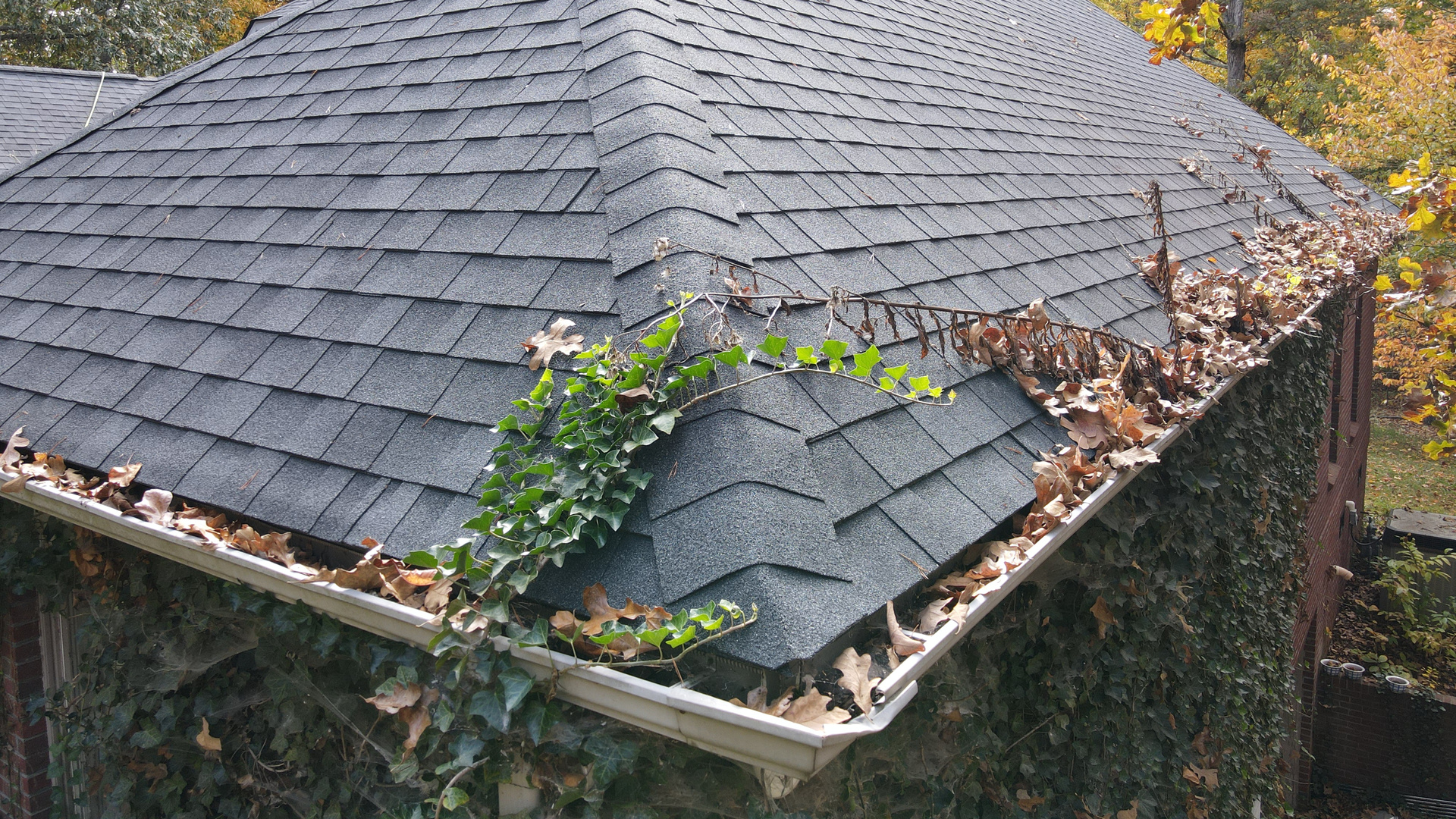
These ivy-choked gutters are too far gone to clean, so MBA Roofing’s warranty-backed gutter replacement restores protection and curb appeal.
Some gutter problems are a quick fix, while others are your gutter’s way of telling you they are finished. Here are some signs your gutters may be nearing the end of their life:
- Visible rust holes or cracks, common with older steel gutters
- Gutters that sag or pull away from the fascia, leaving a gap at the roofline
- Split seams at more than one joint, not a single leak you can seal
- Peeling paint, water stains, or mildew on the siding below, signaling overflow
Any one of these issues may be repairable on its own. But when two or three appear at once, or the same seam keeps failing after it’s sealed, it may be a sign that the metal has fatigued and sealing the next leak is a short reprieve, not a fix. Pooling water in the driveway or a trench washed along the foundation is another sign your gutters are no longer draining properly.
When to Replace Instead of Repair Your Gutters
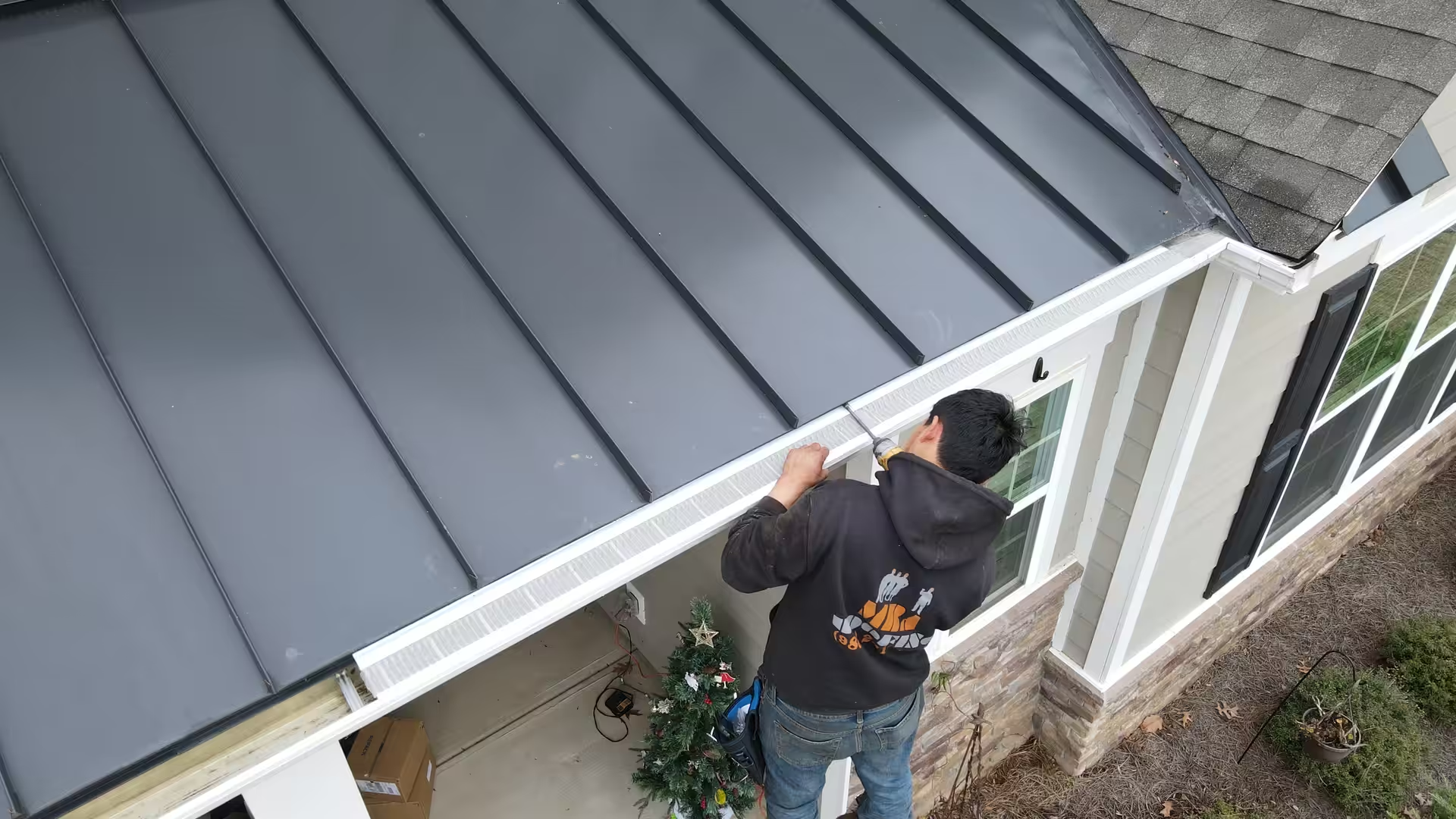
An MBA Roofing technician levels and secures a newly installed gutter and downspout, part of the warranty-backed gutter replacement we’ve provided North Carolina homeowners since 2007.
Gutter repair is often the right call if the overall system is still in good condition. A single leaking seam, sagging bracket, or disconnected downspout can usually be fixed without replacing everything. We only recommend replacing your gutters when you truly need it.
Replacement makes the most sense when the problems are widespread or affecting the structure behind your gutters.
- Repair when the damage is isolated to one spot on the gutters and the rest of the system is still in good condition
- Replace when leaks, sagging, and damage are showing up across several runs, or the fascia behind them has deteriorated
- If you are already planning a roof replacement, it can be more efficient to replace the gutters at the same time rather than scheduling a separate trip later
If you are also tired of climbing a ladder each fall to clean out your gutters, consider installing gutter guards. Our team can size and install them at the same time you get your gutters repaired or replaced so you are set up for success right from the start.
What North Carolina Weather Does to Your Gutters
North Carolina weather can be tough on gutters. Pine needles and leaves can create clogs that hold water in the system all season long. Add in humidity that encourages mildew growth in the trough, and hard summer downpours that test every seam at once, and a North Carolina gutter wears faster than one in a dry climate.
Storms are also an accelerant. High winds and hail can bend gutters, tear them off the fascia, or create dents that affect the pitch that carries water to the downspout. After a rough storm season, gutters that were fine in spring are the ones failing by fall. If a recent storm left your gutters sagging, leaking, or overflowing, it may be worth having someone on our team come out and take a look to see if you have storm damage, rather than just normal aging.
If you are repairing the same gutter after every rainstorm, or spotted daylight through a seam this summer, the smart move is to have it checked before the fall leaf drop and the winter freeze. We have worked on North Carolina roofs since 2007, and as an Owens Corning Platinum Preferred Contractor, a distinction fewer than 1% of contractors hold, we treat your gutters as part of the whole roofing system and not an add-on. We provide honest gutter inspections and will help you determine whether a repair still makes sense or replacement is the better long-term investment.
Learn more about our gutter services, or call MBA Roofing at (704) 440-5535 for a free gutter estimate. We serve homeowners across: