
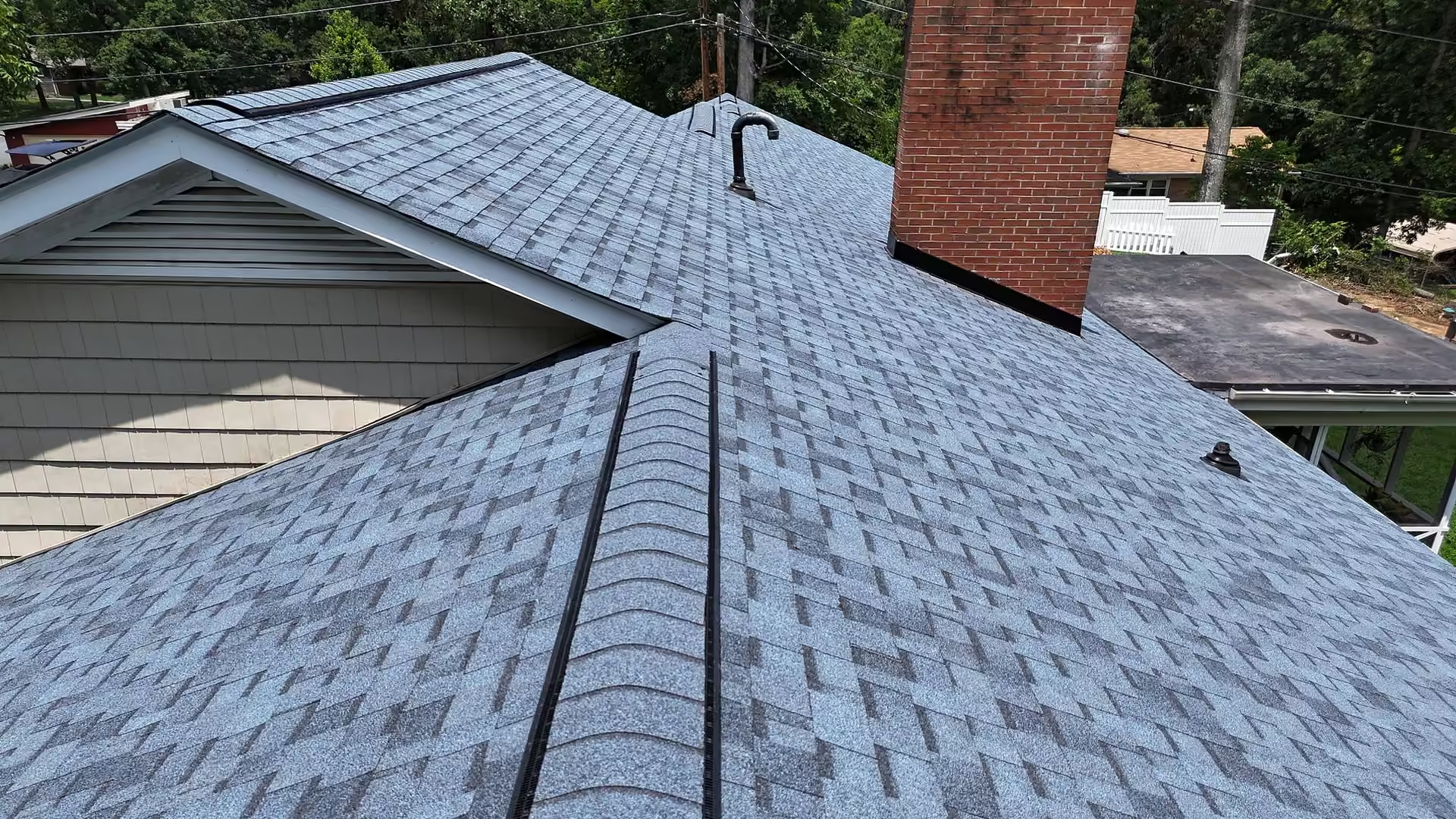
Roof Flashing Repair: Signs and Fixes
When we’re tracking down roof leaks, we often check the joints first, even if the homeowner suspects the leak is from a missing shingle. Shingles are the easiest part of the roof you can see from the driveway, so that’s where people look first. What homeowners don’t know is that water usually gets in at the joints where the roof meets a chimney or a wall. Those joints are sealed with roof flashing, thin pieces of metal that prevent any gaps for water to get in. The issue is that over time, that metal can break down and stop doing its job, leading to repairs.
Flashing fails over time due to:
- Rust eating through older metal where water runs the heaviest
- Caulk along the top edge that dries out and shrinks away from the metal
- Accidental bending of the step flashing from a ladder or siding repair
- Crumbling chimney mortar that lets the metal pull away from the brick
Signs of Failing Roof Flashing
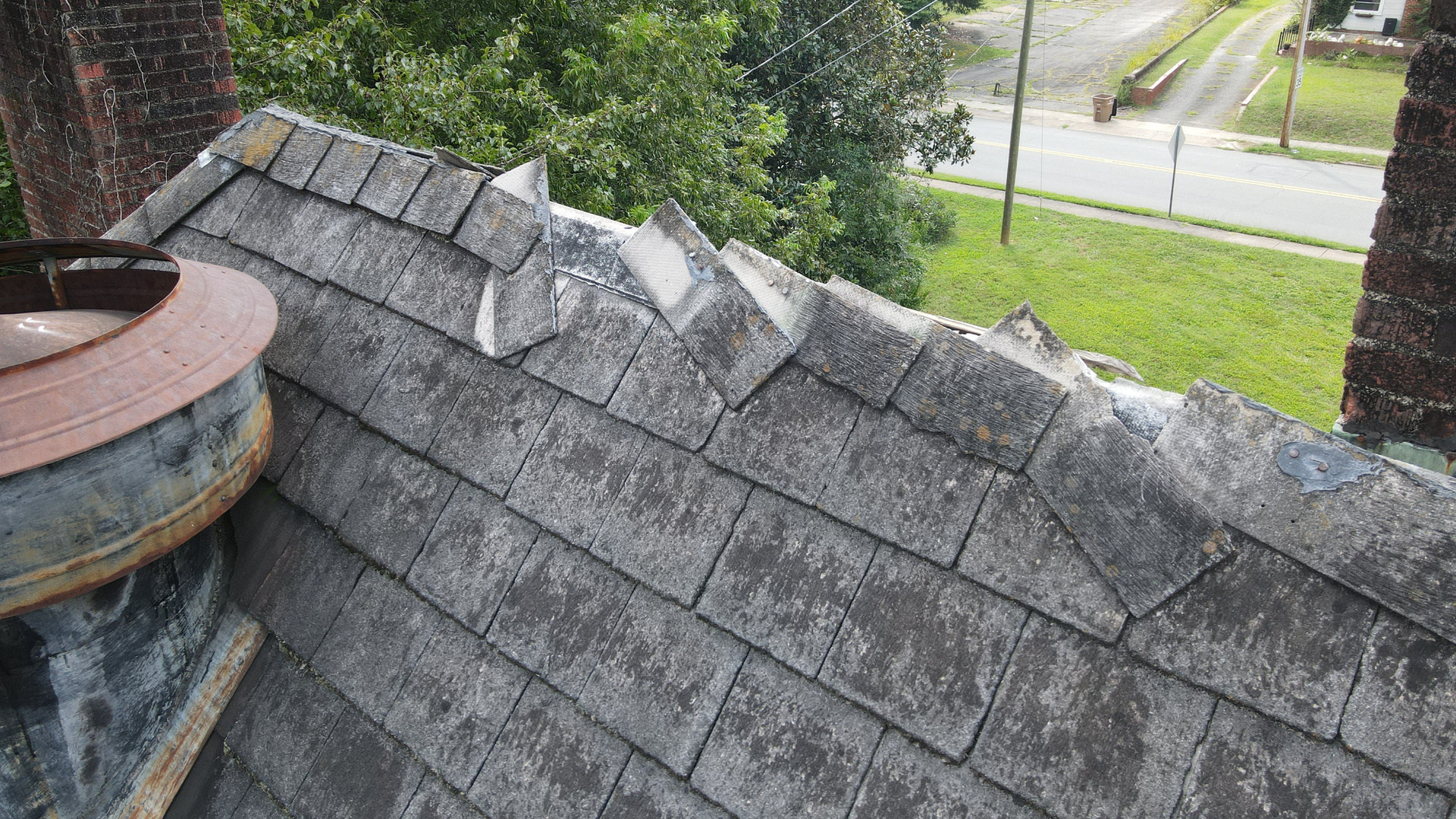
On older roofs, rust and worn materials around chimneys and vents often signal that the flashing is nearing the end of its life.
You can spot roof flashing easily if you know what to look for. After a harsh rain, take a walk around the house and look up at the chimney and anywhere else the roof runs into a wall or has a penetration, and look for:
- Rust streaks or dark stains running down the chimney brick
- Water stains on the siding where the roof meets a wall
- A ceiling stain near a chimney or a skylight
- Peeling paint or a damp spot high on a wall under a roofline
Ceiling stains are one of the most common warning signs your roof needs repair and can be tricky to track back to the original issue. A stain near the chimney can either point to the chimney having a flashing leak, or the water ran along the wood before it dripped, meaning the stain can be several feet away from where the water is getting in.
Tracing ceiling stains back to their source is part of our roof inspection process, so don’t worry about having to get on top of the roof and look for yourself. However, if you can get into your attic easily, check for damp insulation or dark streaks on the wood near the chimney or roof valley to ensure you don’t have flashing issues.
Should I Repair or Replace My Roof Flashing?
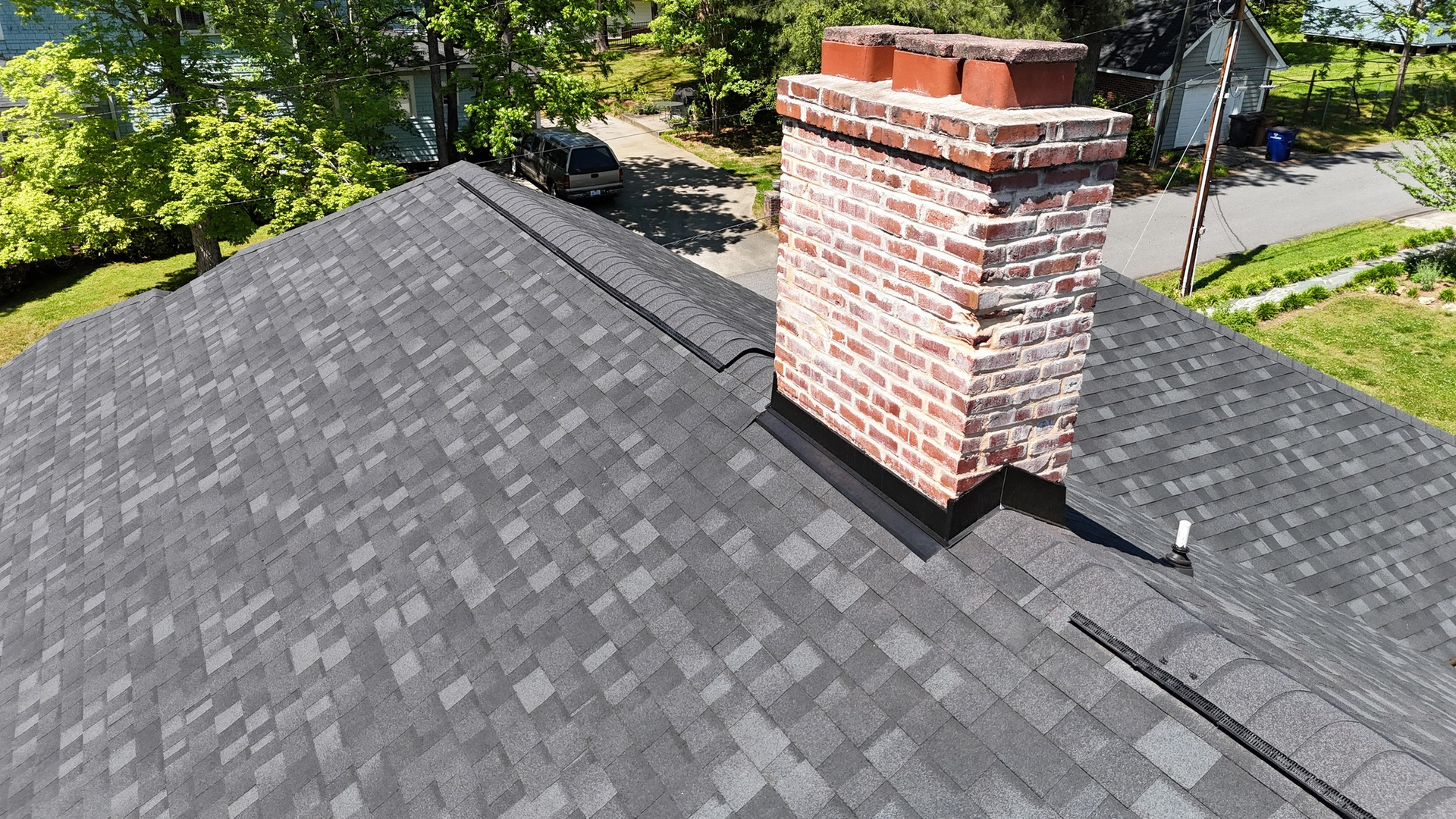
Flashing wraps the base of a chimney to seal the joint where brick meets shingles. This joint is one of the first places we check when tracking down a roof leak.
Not every flashing issue means you need a new roof. At MBA Roofing, we always look for opportunities to make a smaller repair when possible. If the flashing is still in good condition, we may be able to recaulk around it, reseal problem areas, secure loose pieces, or make minor repairs to stop water from getting in. Our goal is to fix the problem without recommending a full roof replacement if one isn’t necessary.
However, replacing the flashing may be the better option when:
- Rust or corrosion has spread across most of the flashing, making a small repair unlikely to last
- The flashing is damaged, deteriorating, or no longer providing a reliable seal.
- You’re replacing the roof. At MBA Roofing, we always replace the roof flashing as part of a full roof replacement.
Your new roof is only as reliable as the materials protecting its most vulnerable areas. Reusing old flashing can leave weak points in an otherwise brand-new roofing system. By installing new flashing with every roof replacement, we help ensure that all components work together to protect your home and support the long-term performance of your new roof. Not every roofing contractor takes the same approach, so it’s worth asking whether new flashing is included in your estimate. It’s one of the important questions to ask a roofing contractor before moving forward with a roof replacement.
Skylight Flashing Repair
Skylight leaks aren’t always caused by the glass itself. In many cases, the problem comes from the flashing around the skylight, which helps direct water away from the frame and prevents it from entering your home. If the flashing has failed, simply applying new caulk or sealant won’t solve the underlying issue. That’s why finding the source of the leak is the first step in determining the right repair.
When skylights leak, a dried-out seal or a loose piece of flashing caught early can be fixed in a single visit. We’re a certified VELUX skylight installer, and when we repair the flashing around a skylight, we recommend checking the roof around it too. If the skylight itself is old, replacing it with a newer unit and a better flashing system can make more sense than patching it.
How We Handle Roof Flashing Leaks
When you notice a leak, the first step is figuring out exactly where the water is getting in. During our residential roof inspections, we check the shingles, flashing, and other areas where water can find its way inside.. Our goal is to find the source the first time, so you’re not calling us back for the same leak. We believe homeowners should understand what’s happening with their roofs, which is why we take photos, explain what we find, and walk you through your options before moving forward. One customer who had us look at a wet spot on a bedroom ceiling put it this way: “He walked me through everything he did and why he did it.” Another wrote, “Friendly, explained everything, with pictures. Repairs are not even noticeable.”
If water is actively coming into your house, we understand the urgency and work to address the issue as quickly as possible. If the leak is related to a recent storm, we check for signs of storm damage and document our findings for your insurance claim. Your insurance company will ultimately determine what’s covered.
Done right, flashing can outlast the shingles around it. That’s the standard we hold our work to as an Owens Corning Platinum Preferred Contractor. Our priority is always to provide an honest recommendation and a lasting solution that protects your home without selling you work you don’t need.
Stop Roof Flashing Leaks Before Winter
A small leak today can turn into a much bigger problem if left untreated. Every time it rains, water can seep through damaged flashing and into your roof decking, insulation, and drywall, potentially leading to costly repairs. With winter approaching in North Carolina, now is a great time to address those small issues before colder temperatures and winter storms make matters worse.
At MBA Roofing, we’re a family-owned and operated company that’s been protecting homes across the Carolinas since 2007. Don’t wait for a small leak to become a big headache call us at 704-440-5535 or schedule a fee roof inspection online.