
Do You Really Need Roof Ventilation?
Stand in your attic on a summer afternoon in North Carolina and you’ll have your answer in about thirty seconds. An unvented attic in our climate can run 40 to 50 degrees hotter than the air outside, and all of that heat is pressing down on your ceilings and up against the underside of your shingles at the same time. So yes, you need roof ventilation. The more useful questions are what it does, what breaks when it’s missing, and how to tell whether your own attic is moving air around the way it should.
What Roof Ventilation Does for Your Home
Roof ventilation is a path for air. Cooler outside air enters low, near the eaves (the roof’s lower edges, where it hangs over the walls), and hot air exits high, at or near the ridge (the peak of the roof). When that path is open, the attic stays closer to the outdoor temperature year-round. When it’s blocked or was never built right, the attic becomes a heat trap in summer and a moisture trap in winter.
NC homeowners feel the summer half of that problem most in their power bill. A 140-degree attic radiates heat through the insulation into the living space below, and the air conditioner runs longer to fight it. The winter half is quieter. Warm indoor air carries moisture up into a cold attic, and without airflow to carry it out, that moisture condenses on the underside of the roof decking, the wood base the shingles sit on.
How Intake and Exhaust Work Together
Ventilation only works as a pair. Soffit vents under the eaves are the intake; a ridge vent or other exhaust at the top is the exit. Hot air rises out of the exhaust, and that movement pulls fresh air in through the soffits without a single moving part. Block either end and the whole system stops. We find this on inspections all the time: a homeowner adds insulation, the new insulation gets pushed tight against the eaves, and the soffit vents are sealed off without anyone realizing it. The roof has vents, but the attic has no airflow.
What Happens Without Roof Ventilation
Shingles are rated to take heat from above. Heat from below is a different story. An attic that bakes all summer cooks the asphalt from underneath, and shingles that should have lasted 25 years start curling and losing granules (the gritty coating that shields them from the sun) years early. Most people don’t connect prematurely aging shingles to their ventilation; instead, they assume the product failed. Manufacturers know better. It’s in the fine print: shingle warranties, including the Owens Corning coverage we install under, can be reduced or voided if the attic isn’t vented the way the manufacturer requires.
Moisture damage moves slower but reaches further. Condensation on the decking feeds mold, rusts nail heads, and soaks insulation until it loses its insulating value. In the foothills and mountain towns we serve, poor ventilation also drives ice dams: heat escaping into the attic melts snow on the roof, and the runoff refreezes at the cold eaves, backing water up under the shingles.
Heat, Moisture, and Shingle Damage
The damage shows up in a predictable order. First, the energy bills creep up. Then the shingles age faster than the warranty says they should. By the time mold or rotted decking appears, the attic has been holding heat and moisture for years. Catch it at stage one and it’s a quick ventilation fix; catch it at stage three and you may be replacing decking along with the roof.
Signs Your Attic Is Not Venting Right
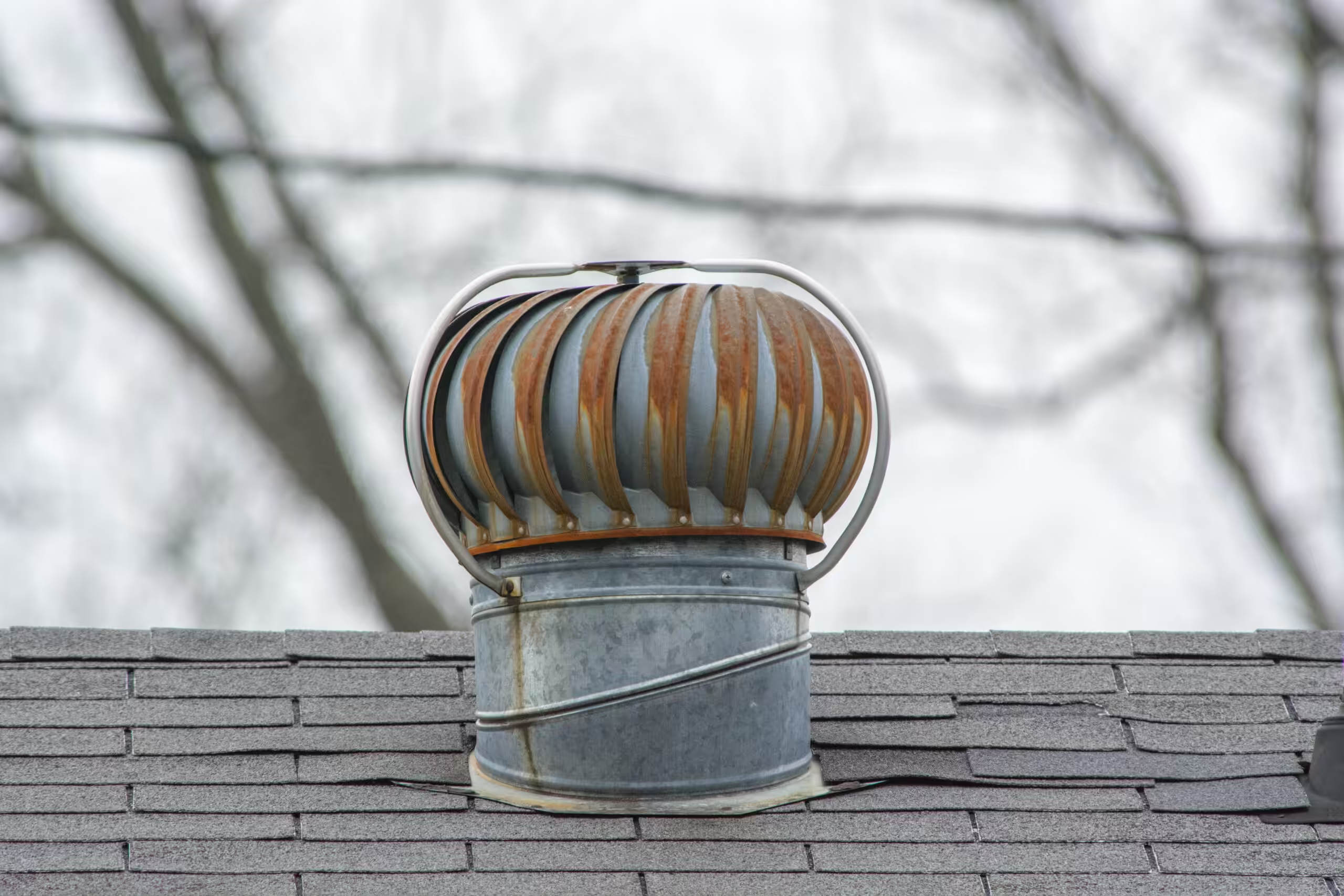
A rusty turbine roof vent
You don’t need to be a roofer to spot most of these. Set aside ten minutes, grab a flashlight, and look for:
- Upstairs rooms that stay hot in summer no matter how hard the AC works
- Shingles curling, cracking, or shedding granules well before their age says they should
- Rust on nail points, damp or matted insulation, or a musty smell when you open the attic hatch
- Ice building up along the eaves in winter if you’re in the high country
Any one of these on its own can have another cause. Two or more of these points indicate an airflow issue.
What to Check in Summer vs Winter
Summer checks are about heat. Touch the attic hatch on a hot afternoon; if it’s warm on the house side, the attic above it is overheating. Winter checks are about moisture. Pick a cold morning and look at the underside of the decking. Frost or damp wood means humid air is reaching the attic and staying there. Summer is the easy season to test for heat, and it’s also when the problem costs you the most.
Types of Roof Vents on NC Homes
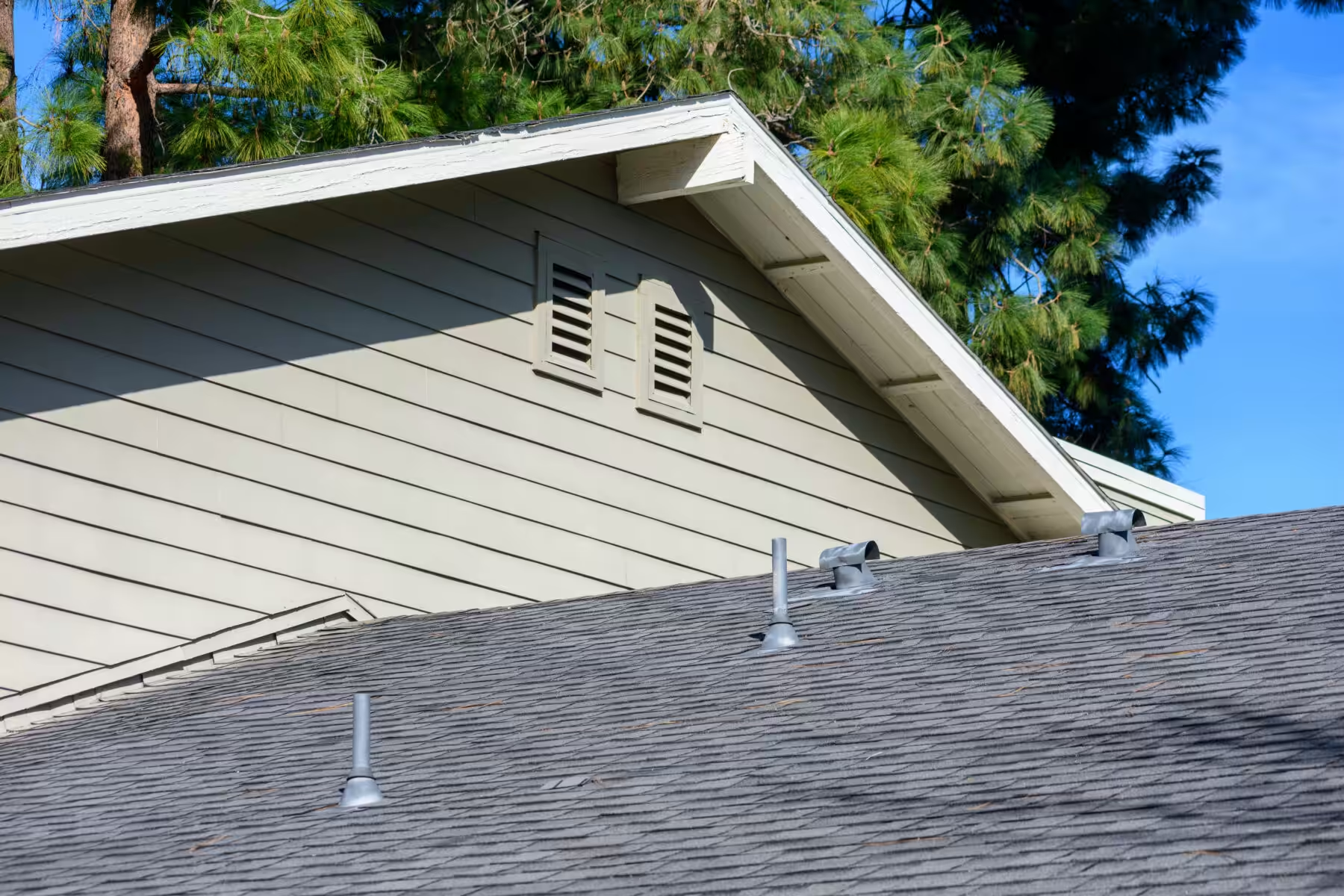
Ridge vents are what we install on most residential roofing projects today. The vent runs the full length of the peak, hides under the row of shingles that caps the peak, and exhausts evenly across the whole attic — but it only works on roofs with a ridge to vent from. Older homes around here usually have box vents (the small square caps scattered near the ridge) or gable vents, set into the triangle-shaped wall section at each end of the roof.
Roof shape decides a lot of this. A hip roof — one where all four sides slope up to meet at the ridge — usually has plenty of ridge line and is a good candidate for a ridge vent. A gable roof, the more common triangle-ended shape, often can’t fit one, which is where a gable vent or a powered attic fan comes in instead. Powered fans earn their keep on those roofs specifically, pulling air through when a ridge vent isn’t an option — though they’re not the fix the marketing suggests for every roof type. (Here’s more on how roof shape affects venting choices.)
More venting isn’t automatically better. Mixing exhaust types without understanding how they work together is the mistake we correct most often: add a powered fan to a roof that already has a ridge vent, and the fan can pull its air from the ridge instead of the soffits, short-circuiting the system and leaving the lower attic unventilated. Balance matters more than quantity, and the right answer depends on the shape of your roof.
Ridge Vents vs Box Vents vs Fans
A ridge vent wins on most asphalt shingle roofs: continuous exhaust, no electricity, and nothing to break. Box vents do the job on roofs without enough ridge line to vent from. Fans make sense for a narrow set of attics where passive airflow can’t be achieved, and they need their intake side solved first. If your roof is due for replacement anyway, that’s the best and most affordable time to update your ventilation — the vents go in as part of the project instead of as a retrofit.
Get Your Ventilation Checked by MBA Roofing
That summer attic test at the top of this post costs nothing to try yourself. Every estimate we run includes a look at the ventilation, because installing new shingles over a starved attic sets the new roof up to fail the same way the old one did. If your upstairs won’t cool down or your shingles are aging ahead of schedule, have your roof’s ventilation checked before another summer bakes the problem in. Call us at (828) 276-1883 or request a free estimate online. We serve homeowners across: