Choosing the Right Metal Roof for Flat or Nearly-Flat Buildings: A Simple Guide
When it comes to roofs that are flat or nearly flat, picking the wrong materials can lead to leaks, early damage, and expensive repairs. Metal roofing is an excellent choice for these types of buildings—but only when you choose the right system for your specific roof.
At MBA Roofing, we help business owners, property managers, and building designers make smart roofing decisions. This guide explains everything you need to know in plain language.
What Makes a Roof “Low-Slope” and Why Should You Care?
Understanding Your Roof’s Angle
Your roof’s angle (how steep it is) matters more than you might think. We measure this angle as a ratio. For example, a roof that rises 4 inches for every 12 inches across has a “4:12” slope.
If your roof rises 3 inches or less for every 12 inches, it’s considered “low-slope.” Many metal roofs work well on roofs that are almost completely flat (rising just ¼ inch per foot) up to moderately angled roofs.
Why This Angle Matters So Much
The angle of your roof affects three critical things—especially in a state like North Carolina, where heavy rain, seasonal storms, and humidity are common:
-
Water drainage: Flatter roofs don’t shed rainwater as quickly, and our region’s frequent downpours mean water can sit on the roof longer. Seams and connections must be extra water-tight.
-
Weight and stress: When water pools after a strong North Carolina rainstorm, it adds weight your building must support.
-
The right materials: The flatter the roof, the more water-tight (not just water-resistant) your roofing system needs to be.
Getting this wrong means leaks and problems—even if you use expensive materials.
Why Choosing the Right Panel Style Matters
Two Ways Metal Roofs Handle Water
Metal roofing systems work in two fundamentally different ways:
-
Water-shedding systems let water run off quickly using gravity—best for steeper roofs.
-
Water-tight systems remain sealed even when water sits on them temporarily—essential for flat or nearly flat roofs.
For North Carolina buildings—whether on the coast, where wind-driven rain is common, or in the Piedmont, where storms can bring heavy downpours—a water-tight system with sealed seams and hidden fasteners is critical. Using the wrong panel leads to leaks, rust, voided warranties, and premature failure.
Common Metal Panel Types Explained Simply
Standing Seam Panels
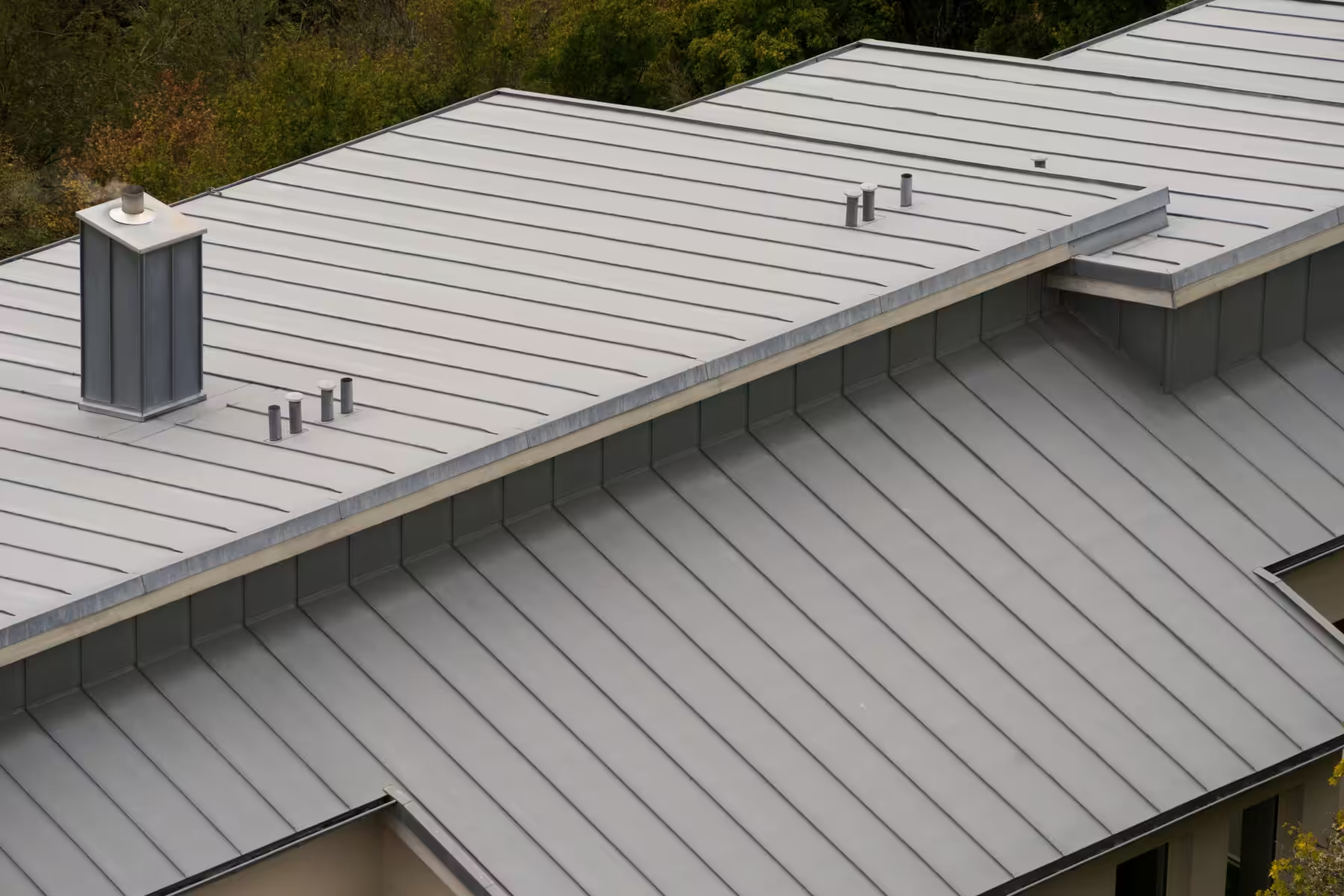
These are the gold standard for flat and low-slope roofs. They have raised vertical edges that lock together and are sealed either by a machine or by snapping them together.
Why they’re better: Fasteners are hidden underneath, eliminating common leak points. They are approved for roofs that are almost completely flat, handle temperature swings across North Carolina’s varied climate, resist wind, and stay weather-tight for decades.
Corrugated and Exposed-Fastener Panels
These economical panels have visible screws going through them into the roof deck. While they’re popular for warehouses and barns, they need steeper roofs—usually at least a 3:12 slope.
Because the screws and washers are exposed to North Carolina’s sun, heat, and humidity, they can deteriorate faster and create leak points. These panels need more maintenance and aren’t ideal for flatter roofs.
Metal Shingles and Decorative Panels
Metal shingles and specialty designs look great but need careful installation. Each product has specific angle requirements—always check before buying. These work best on roofs toward the steeper end of low-slope (2:12 to 3:12 angles).
Important Installation Details
Choosing the right panel is just the start. These details make the difference between a roof that lasts 40+ years and one that fails early—especially given North Carolina’s mix of humidity, heat, occasional ice, and storm exposure.
Underlayment (The Protective Layer Underneath)
- For very flat roofs (less than 2:12 slope): Use ice-and-water shield
- Use synthetic materials that resist tearing and UV damage
- Cover the entire roof for best protection
Sealants and Seams (Keeping Water Out)
- Factory-applied sealant tapes for consistent quality
- Field sealants that work with your panel’s coating
- Machine-sealed connections for the flattest roofs
Attachment Systems (How Panels Connect)
- Hidden clips that let the metal expand and contract with temperature changes
- Proper clip spacing to handle wind
- Correctly tightened fasteners (not too tight, not too loose)
Drainage (Getting Water Off the Roof)
- Eliminate low spots where water can pool
- Add tapered insulation to create positive water flow
- Make sure drains are large enough
- Consider backup overflow drains
Following the Rules
- Meet building code requirements
- Follow manufacturer instructions exactly
- Get required permits and inspections
- Document everything for warranty coverage
MBA Roofing: North Carolina Roofing Professionals
We start by thoroughly examining your building:
- Measuring your actual roof angles
- Checking the roof deck condition and drainage
- Analyzing your local North Carolina weather patterns and exposure
- Understanding what you need from your roof
Then we recommend panels and systems designed for your real-world conditions—not perfect scenarios. Our installation teams follow manufacturer requirements precisely, because flat and low-slope roofs require extra care and attention to detail.
When installed correctly, metal roofs on flat and low-slope buildings regularly last 40+ years—up to 20 years longer than some rubber or plastic roofing systems. Our experience helps you get that long-lasting performance.
Ready to explore your options? Contact MBA Roofing today. We’ll help you understand panel choices, system requirements, and installation practices in plain language—ensuring your roof protects your building for decades to come.